
Mari-Liis Korkus is a PhD student in Estonian and Finno-Ugric Linguistics at the University of Tartu, who’s been organizing a linguistics club with high school students in Tartu, Estonia since 2023. Mari-Liis kindly answered our questions for this LingComm IRL interview, a series edited by Gretchen McCulloch and Leah Velleman highlighting face-to-face, community-driven linguistics communication activities without much of a web presence to help lingcommers learn from each others’ experiences in doing local activities.
What community group(s) or organization(s) did you work with?
I’ve been interested in linguistics – and languages more broadly – since I was a teenager, partly because I grew up in a bilingual family. During the first year of my PhD studies, I became increasingly interested in communicating linguistics to teenagers. At first, I gave occasional workshops as part of the Teen Speak in Estonia research project. Eventually, I initiated Noorlingvistide keeleklubi (in English: Young Linguists Language Club) to engage with them more regularly.
How did you get started making a linguistics club for teens?
The idea came to me during a conference in 2022, when I was discussing with the head of our institute, Professor Liina Lindström, the various ways of engaging more Estonian youth in linguistics and broadening their general knowledge of Estonian and other languages. Having experience presenting to younger audiences and drawing inspiration from the initiatives introduced at the #LingComm21 conference, I expressed interest in helping launch a project that would serve this purpose. Professor Lindström greenlit the idea, and just a few months later, in March 2023, I was standing in a small classroom, hosting the very first meeting of Noorlingvistide keeleklubi.
What does your linguistics club look like now?
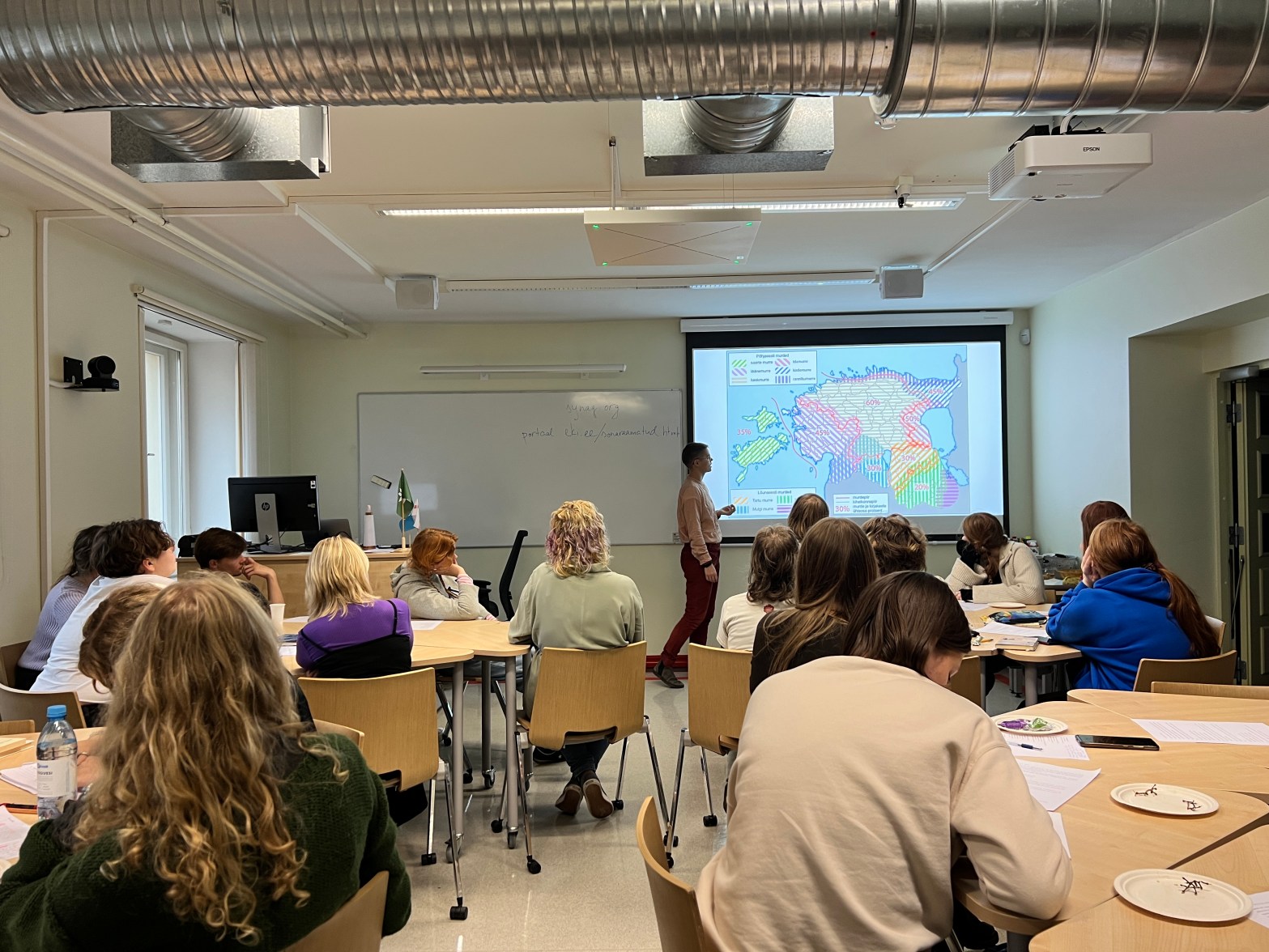
Noorlingvistide keeleklubi is a monthly linguistics club at the Institute of Estonian and General Linguistics of the University of Tartu. It’s a kind of meeting spot for lingthusiastic high school students [grades 9-12, age 15-18] who want to learn more about how languages work – especially those spoken in Estonia. The meetings are held once a month on Saturdays, lasting for about three hours. Each meeting features one or more linguists who give a talk and host a workshop on a specific topic. So far, topics have ranged from Estonian dialects to conlangs, from feminist linguistics to onomastics. Although I’m primarily involved in the organizational side of the club, I’ve also given a talk on two occasions. This year, the club also hosted its first-ever two-day camp, where students got an introduction to psycholinguistics. At various times, the Estonian Ministry of Education and Research and the Estonian Research Council have supported the club’s activities. Thanks to this support, students can attend all club events for free. If you’re interested in learning more, I’ve written an overview of the club for Linguistics Vanguard.
What are a few specific things you did that the club members resonated with?
A few examples come to mind from the past year. To engage a younger audience, it’s important to see things from their point of view and find ways to connect the topic to their experiences. Adding a personal touch can make them genuinely want to listen. For instance, we had a session on multilingualism where students created their language portraits. Many realized they’re much more multilingual than they thought and that multilingualism comes in many forms. Interactive activities can make a big difference too. In our meeting on Finno-Ugric languages, students played games (like Bingo and Memory) based on the lecture. It kept them focused and engaged even the shyest students. But probably the biggest thing I’ve learned through the club is how important it is to show passion. When the speaker is a little nerdy and excited about the topic – like it’s the most interesting thing in the world – that energy can become contagious. You might see how it lights up a spark in a student’s eyes!
What’s something you’d do differently next time?
I wouldn’t say I want to change anything, but rather, I’m looking for ways to expand the project. For example, when it comes to the monthly meetings, I think it would be interesting to occasionally hold them in different locations by collaborating with local museums or language centers. This year’s camp was a big success, since we filled all the spots in less than a week. So in the future, it would be great to organize a longer camp, which would last maybe four or five days instead of just two. I’ve also been thinking about how to build more of a sense of community among participants, so they’d interact more during breaks and also outside of the club. One idea I’ve considered is creating a social media account or a newsletter that the students could help run together.
Where can people find more about you or get in touch if they’re working on a similar project?
I would love to connect with anyone doing LingComm IRL or online, especially with a focus on youth. Feel free to reach out to me via my e-mail: mariliis.korkus@gmail.com!
LingComm IRL is a series bringing attention to under-documented face-to-face lingcomm projects. Do you know of a great IRL lingcomm project that doesn’t have much if any information about it online yet? Let us know! Does your lingcomm project have a website with information about its structure so other people can use it as a model? Let us know so we can link to it from the LingComm Resources page.
 LingComm